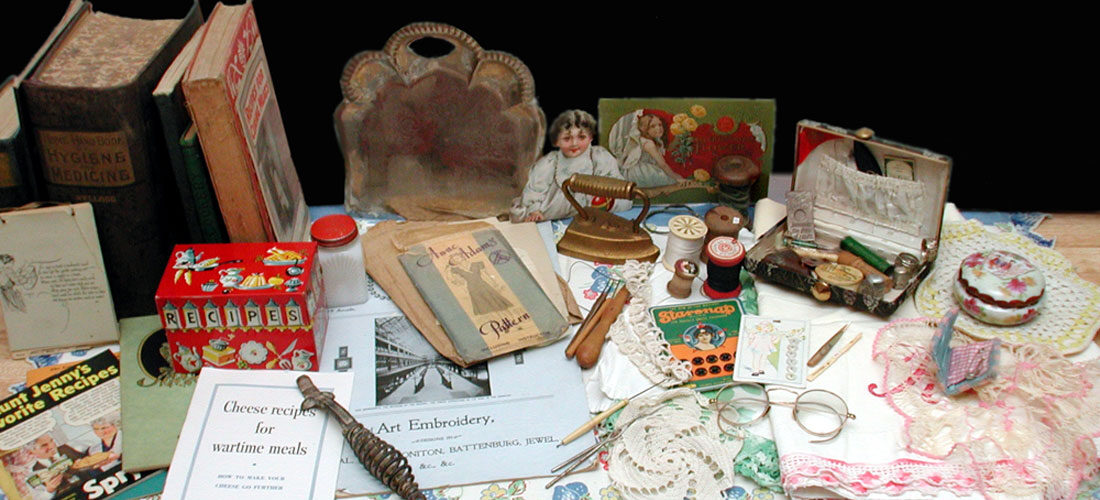
Family heirlooms are often imagined as valuable jewelry, antique furniture, rare artwork, or carefully preserved documents. In reality, some of the most meaningful possessions passed between generations have very little financial value. An old cooking pot, handwritten notebook, wristwatch, sewing box, camera, tool, or piece of furniture can become almost impossible for a family to discard.
These objects become unofficial heirlooms because their value is created through association rather than Price. They were present during ordinary routines, important transitions, celebrations, and countless moments nobody thought to document. Eventually, an everyday possession stops being simply an object and becomes physical evidence of family history.
Ordinary Records Can Become Unexpected Connections To The Past
Families preserve formal documents for practical reasons, but even ordinary records can eventually acquire emotional significance. An old diary, application receipt, handwritten list, or folder may provide clues about how previous generations managed everyday responsibilities.
Modern searches such as pmmvy 2.0 लॉगिन पंजीकरण ऑनलाइन demonstrate how many administrative activities are now approached digitally. Earlier generations often accumulated physical paperwork instead. Decades later, these materials can reveal addresses, handwriting, dates, occupations, and other small details that help descendants reconstruct family stories.
The original purpose may disappear while the historical value remains. Something once kept because it was necessary can survive because it becomes meaningful.
Places Give Objects Additional Meaning
Objects often become significant because families associate them with a particular home, town, farm, or neighborhood. A wooden chair may be remembered as belonging to a grandparent’s kitchen. A set of keys may recall a house that no longer exists. An old map can preserve the memory of land connected with earlier generations.
Information searches such as bhu naksha Rajasthan 2025 show how land and place continue to be represented through records and maps. Within families, however, geographical memory is frequently preserved through much smaller objects.
A faded photograph showing a familiar courtyard or an old container from a family property can become valuable because it provides a tangible connection to a location that may have changed completely.
Working Tools Carry Evidence Of The People Who Used Them?
Tools are particularly likely to become unofficial heirlooms because repeated use leaves visible evidence. Handles become smooth, metal develops scratches, and repairs reveal years of practical work.
An old hammer, measuring tool, sewing machine, gardening implement, or carpenter’s box may be technologically outdated but emotionally irreplaceable. Its imperfections provide evidence that someone actually used it.
A modern worker might obtain information through resources such as www.bandhkamkamgar.net, while earlier generations often depended more heavily on physical tools, handwritten instructions, and knowledge passed directly between people. When one of those tools survives, it can represent both an occupation and the person who practiced it.
The object becomes valuable precisely because it was useful rather than decorative.
Chance Can Decide Which Objects Survive
Families do not always deliberately choose their heirlooms. Survival can be surprisingly accidental.
A valuable item might be sold or lost, while an inexpensive object remains in the back of a cupboard for decades. One person eventually discovers it, asks about its history, and learns that it belonged to a relative. From that moment, an ordinary possession can acquire a new identity.
Even temporary information connected with something like the Punjab State Lottery Portal illustrates how everyday life contains countless moments that seem important only briefly. Most disappear from attention, while a few become connected with memorable stories. Perhaps an old ticket, newspaper clipping, or handwritten number survives because it reminds a family of a particular day.
Chance preserves the object, but storytelling transforms it into an heirloom.
Digital Objects May Become Tomorrow’s Family Artifacts
Family heirlooms are no longer exclusively physical. Photographs, videos, voice recordings, emails, scanned documents, and digital accounts increasingly contain family history.
Someone today may use https://udyamiyojana.org or countless other online resources as part of an ordinary digital routine. Future generations, however, may find the broader digital traces of today’s life historically interesting. Screenshots, early websites, saved messages, and digital photographs could eventually reveal how relatives worked, communicated, and managed everyday responsibilities.
The challenge is preservation. A physical photograph can survive forgotten in a drawer, while digital material may disappear when a device fails, an account closes, or a file format becomes obsolete.
Families may therefore need to become more deliberate about preserving meaningful digital material.
Repeated Use Creates Emotional Value
Objects often become meaningful because they repeatedly appear in family routines. A serving bowl used at every celebration, a blanket placed on the same chair, or a radio played every morning gradually becomes part of the background of family life.
Nobody necessarily declares these objects important while the routine continues. Their significance becomes obvious only when circumstances change.
After a relative dies, moves away, or leaves a longtime home, an ordinary object can suddenly carry enormous emotional weight. It represents continuity with routines that can no longer be recreated exactly.
This helps explain why monetary value is often irrelevant. Replacing the object with a newer and more expensive version would not replace its associations.
Repairs Add Chapters To An Object’s Story
Visible repairs can make family possessions more meaningful rather than less desirable. A stitched tear, replaced handle, patched surface, or handwritten correction records an additional moment in the object’s history.
Modern consumer culture often encourages replacement when something becomes damaged. Heirlooms follow a different logic. Their imperfections can become evidence of persistence.
A repaired object may also connect several generations. One person originally owned it, another repaired it, and someone else eventually inherited it. Each intervention adds another layer to the story.
Stories Determine Whether Meaning Survives
An object cannot explain its own significance. Without accompanying stories, future generations may see only an old utensil, photograph, tool, or piece of furniture.
This is why storytelling plays such an important role in creating heirlooms. When someone explains who owned an object, how it was used, and why it remained in the family, ordinary material acquires context.
Writing a short note, labeling photographs, or recording family stories can preserve this context. Otherwise, valuable emotional information may disappear even while the physical object survives.
Heirlooms Are Created Through Meaning Rather Than Price
The objects families treasure most are not always the ones anyone originally intended to preserve. They survive because they become connected to people, places, routines, work, celebrations, and stories.
An unofficial family heirloom might have started as nothing more than an everyday tool or household item. Time changes its purpose. Once the person or environment associated with it is gone, the object becomes a rare physical connection to something that cannot be replaced.
That is why an old cup can sometimes matter more than an expensive antique. Its value does not come from what someone would pay for it. It comes from everything the family remembers when they hold it.